DANCE AND RITUAL IN SRI LANKA
A four-part ethnographic film series
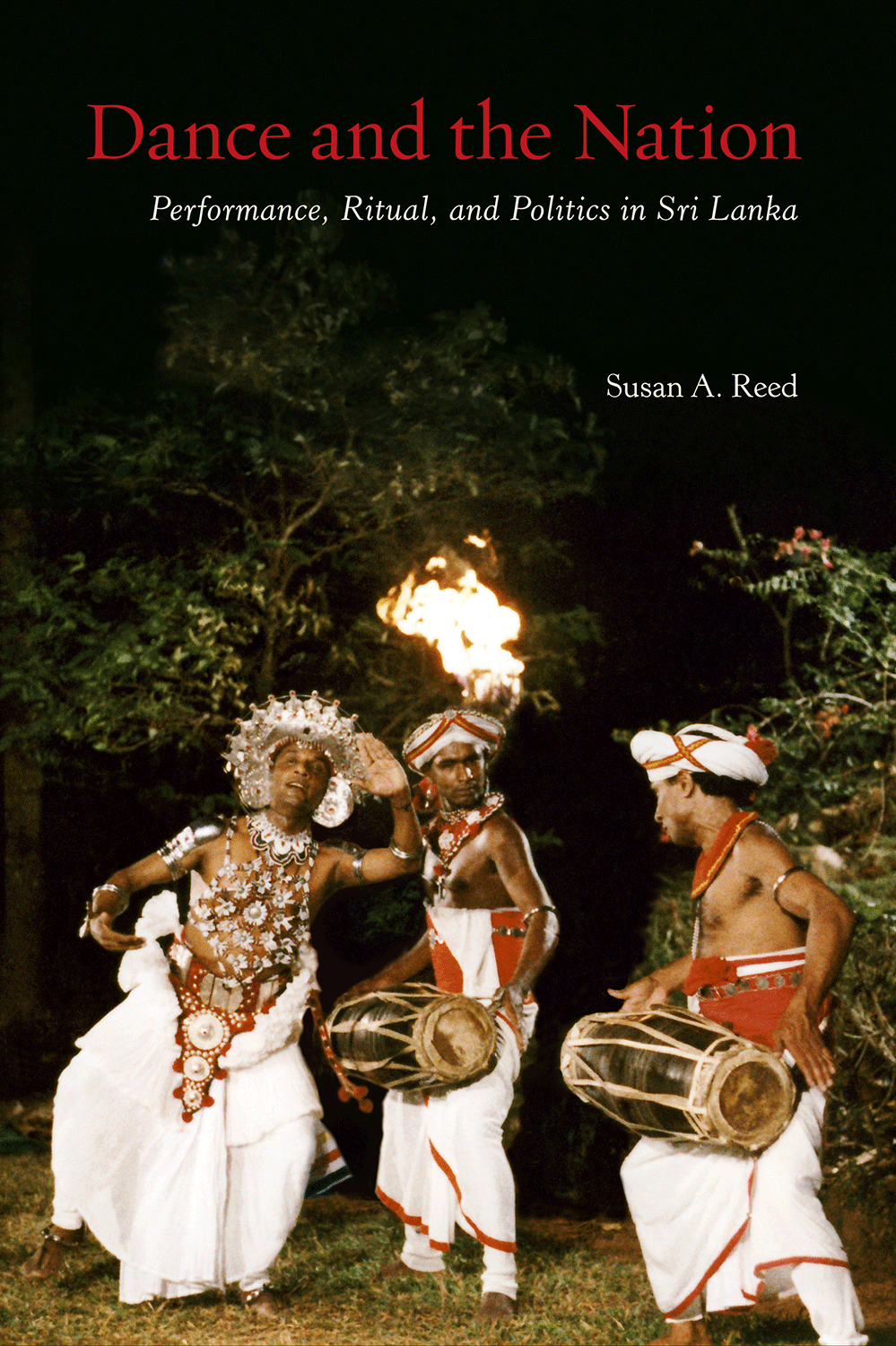
Produced as a DVD companion to the book Dance and the Nation: Performance, Ritual and Politics in Sri Lanka by anthropologist Susan A. Reed (2010), this series has been edited from over 50 hours of material recorded by Reed in Kandy in the late 1980s and includes unique performances of ritual ceremonies and stage dances by some of their finest exponents.

Sri Lanka &
Kandyan dance


Formerly known as Ceylon, Sri Lanka is a tropical island located 20 miles off the southern coast of India. With a population of about 22 million, Sri Lanka is home to the Sinhala ethnic majority (74%), a primarily Buddhist group that speaks Sinhala, and the Tamils (12%), who are mainly Hindu and speak Tamil. Other groups include Muslims (7%), Indian Tamils (6%), and Burghers (1%).
The island was colonized by the Portuguese (1505–1658), the Dutch (1658–1796) and the British (1815-1948). British colonial rule helped to create divisions between ethnic groups, especially between the Sinhalas and the Tamils. After Independence, in 1948, these divisions deepened and led to protests by Tamils and, eventually, to a prolonged civil war (1983–2009).
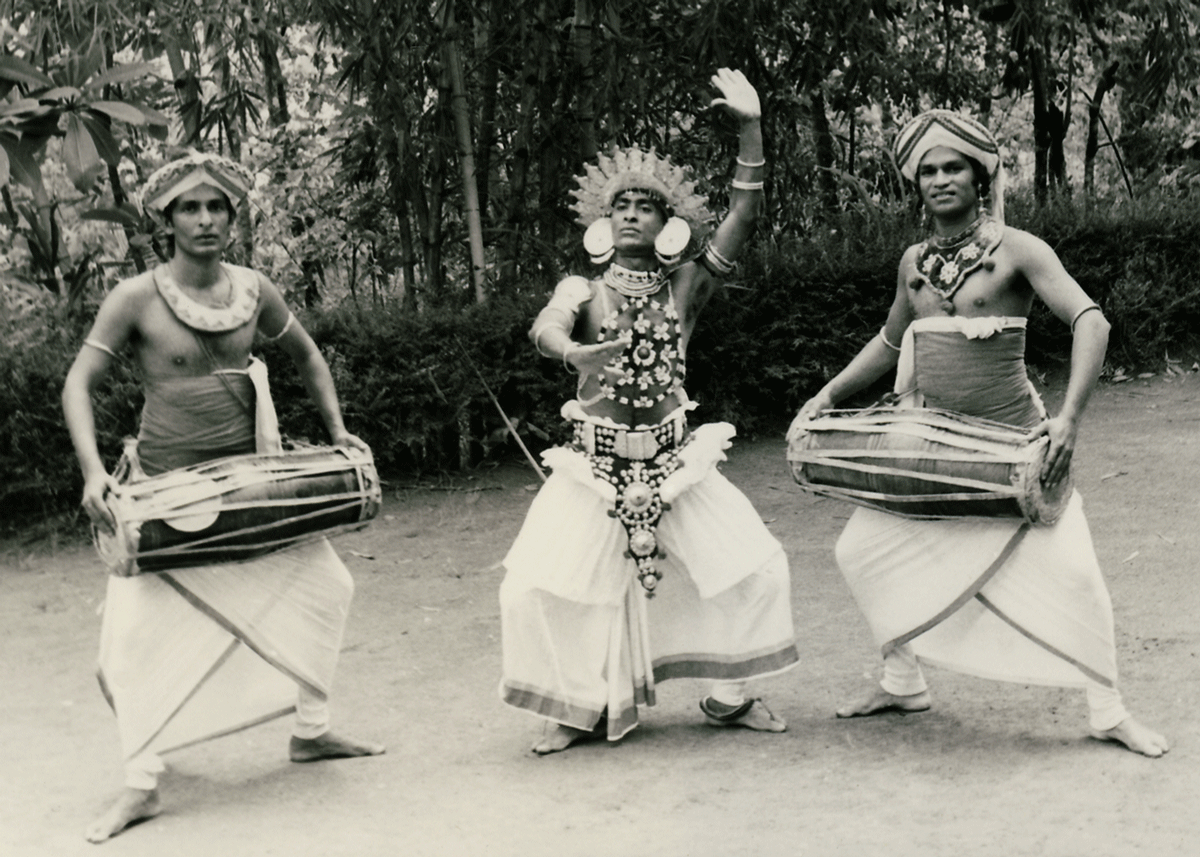
Kandyan dance played a key role in the formation of an ethnic and national identity. From its roots in a local Sinhala tradition, it became part of the nationalist ideology and program and was later adopted as the official, state-sponsored "national" dance of Sri Lanka.
1. Introduction
A brief introduction to the Kandyan region in Sri Lanka and to the research project, offering a glimpse of the variety of ritual performances, stage dances, rehearsal and training sessions that were studied and documented by Susan Reed during fieldwork she conducted in 1987-89.
2. Kohomba Kankariya ritual
For centuries the Kohomba kankariya was the most important ritual in Kandyan villages. Led by the yakdessas, hereditary dancer-priests of the berava drummer caste, the ceremony was performed during several days as a thanksgiving, a forgiving, or a postharvest celebration. By the mid-1950s, however, the traditional kankariya had vanished in most areas of the Kandyan region and became a "museum piece," a national symbol of Sinhala cultural heritage. The ritual featured in this video was sponsored and documented by Reed in 1988.
3. Kandyan stage dance
Kandyan dance is one of three regional dance forms identified with the Sinhala majority and is derived from the Kohomba kankariya village ritual practices. It is now recognized as a "national" dance of Sri Lanka, heavily supported by the state, and a required subject in schools and tourist stages, religious and secular rituals. This video includes short selections from three of the most renowned Kandyan stage dances: the Gajaga Vannama, Yuga Natuma and Asadrusa Vannama.
4. Exercises & training
This video includes excerpts from two training sessions with children and young women at the Tittapajjala Suramba's village dance school. The school, established in 1931 and named Sri Lanka Deshiya Kalayatanaya in 1955, is generally considered to be the finest Kandyan dance school in the country. Like all dance schools, the Tittapajjala school is run according to regulations laid out by the Cultural Ministry.
Credits
Produced by Susan A. Reed
Directed by Wilton Martinez
Research by Susan A. Reed
Written & Narrated by Susan A. Reed
Camera & Sound: Susan A. Reed
Editing, Post-production & DVD Authoring: Wilton Martinez
Funding & support: National Science Foundation, Bucknell University, Society of Dance History Scholars
Distributed by The University of Wisconsin Press